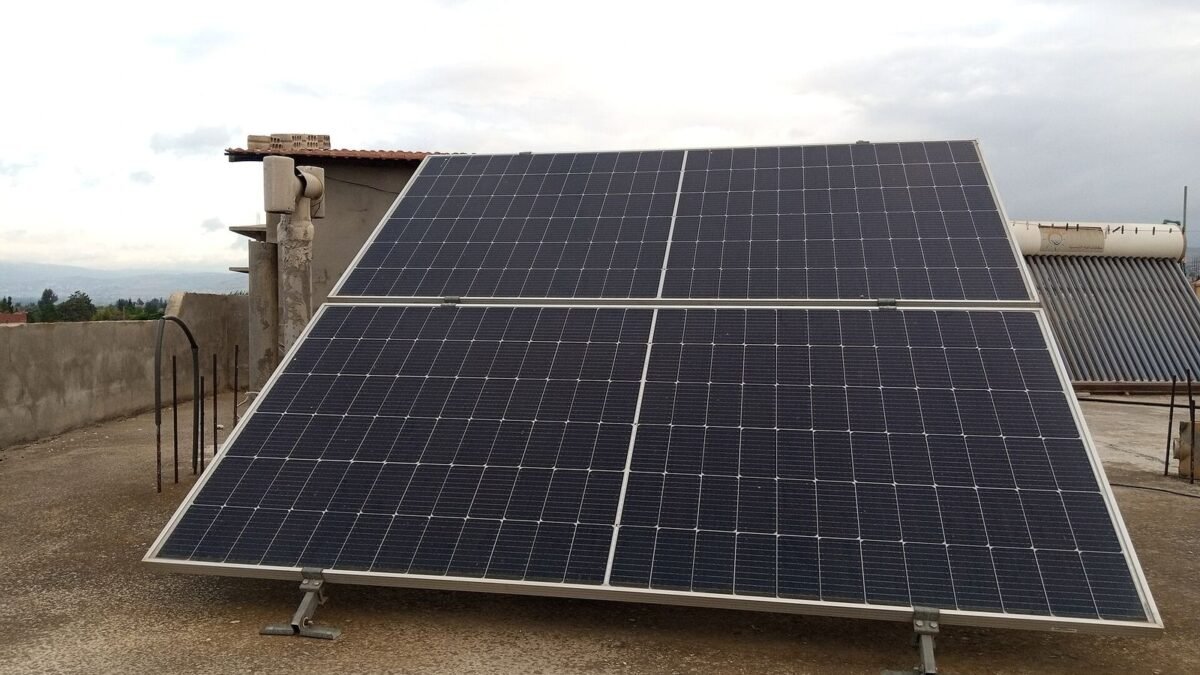
Across the region, rooftops, fields and even former coal mines are being covered with solar panels. Prices have fallen dramatically over the past decade, and countries with abundant sunshine are starting to take advantage.
The photovoltaic effect
Most solar panels are made of silicon cells. When light hits the cell, particles of light called photons transfer energy to electrons in the silicon. The cell is built with two layers treated differently, creating an electric field at their boundary. That field pushes freed electrons in one direction, producing a direct current. Metal contacts collect the current, and an inverter converts it to the alternating current used in homes and the grid.
Typical commercial panels convert around 20 to 23 percent of the sunlight that reaches them into electricity. That may sound low, but because sunlight is free and abundant, it is enough to make solar one of the cheapest sources of new electricity in many parts of the world.
Why the Balkans suit solar
Southern parts of the region, including much of Albania, southern Montenegro and North Macedonia, receive high levels of sunshine, comparable to parts of Spain and Italy. Solar can complement hydropower, which dominates electricity in Albania but suffers in dry years. Large solar parks have been built or planned in several countries, and governments have run auctions for renewable capacity.
Panels on the roof
Households and businesses can install panels to produce their own power, often called prosumers. Rules vary by country: some allow surplus electricity to be fed into the grid and offset against consumption, others pay a set price. Installation costs have fallen, and payback periods of several years are common where electricity prices and sunshine are high.
Before installing, it is worth checking the roof’s orientation and shading, the condition of the roof, local permit and grid connection rules, and the reputation and warranties of the installer. Panels usually carry performance warranties of 25 years or more.
The challenges
Solar produces power only in daylight and less in winter, so grids need other sources, storage and good connections with neighbouring countries. Large installations raise questions about land use and the impact on landscapes and farmland. Battery storage is becoming cheaper and is increasingly paired with solar.
For a region long dependent on coal and imported energy, solar offers a chance to produce cleaner power at home, provided grids and regulations keep pace.