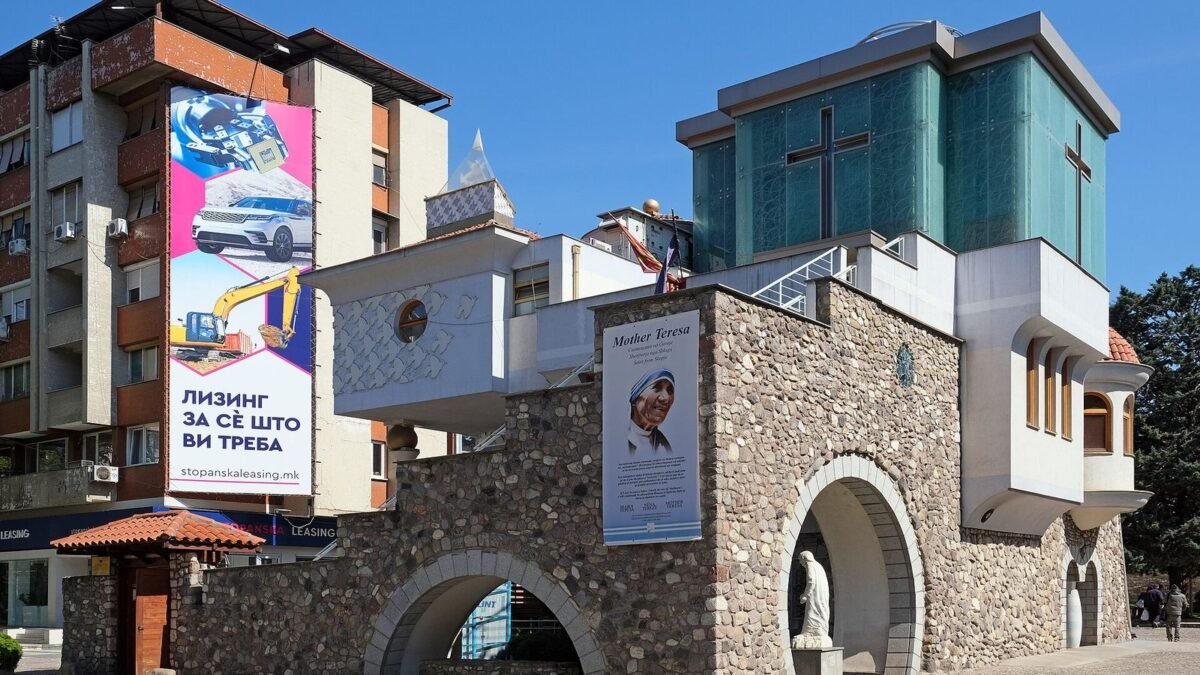
Few people born in the Balkans became as famous worldwide as the small woman in a white sari with blue borders. Mother Teresa was claimed as a symbol by Albania, Kosovo and North Macedonia alike, and her image appears on airports, squares and stamps across the region.
Early life in Skopje
She was born Anjezë Gonxhe Bojaxhiu on 26 August 1910 in Skopje, then part of the Ottoman Empire, into a Catholic Albanian family. Her father, a merchant involved in local politics, died when she was a child. Her religious calling developed in the parish of the Sacred Heart in Skopje, and at 18 she left home to join the Sisters of Loreto, an Irish order with missions in India. She would never see her mother again.
Kolkata and the Missionaries of Charity
She taught for years at a school in Calcutta, now Kolkata. In 1946, she later said, she felt a call to serve the poorest of the poor. In 1950 she founded the Missionaries of Charity, a congregation dedicated to caring for the sick, the dying, orphans and people with leprosy. Its homes, starting with a hospice for the dying in Kolkata, spread to dozens of countries.
Recognition
She received the Nobel Peace Prize in 1979 and asked that the customary banquet be cancelled and the money given to the poor. She died in Kolkata on 5 September 1997. Pope Francis declared her a saint in September 2016 in a ceremony in Rome attended by large delegations from Albania, Kosovo and North Macedonia.
Criticism
Her work also drew criticism. Some doctors and journalists questioned the standard of medical care in her homes for the dying, the handling of donations and her strict positions on contraception and abortion. Supporters respond that her mission was spiritual comfort and presence rather than modern hospitals, and that she brought attention to people the world ignored.
Her place in the region
In Skopje, a memorial house stands near the site of the church where she was baptised. Tirana’s main airport and a central square bear her name, as does the cathedral in Pristina. For many Albanians she represents an image of their people defined by compassion, an image that still resonates far beyond the Balkans.


