Linguists group most European languages into large families: Germanic, Romance, Slavic and others. Albanian stands apart. It belongs to the Indo-European family, like English, Greek and Russian, but forms an independent branch with no close living relatives.
Old roots, late writing
The origins of Albanian are debated. Many scholars link it to the ancient languages of the western Balkans, such as Illyrian, though so little Illyrian survives that the connection is hard to prove. What is clear is that Albanian absorbed words from Latin, Greek, Slavic languages and Turkish over many centuries while keeping its own grammar and core vocabulary.
The oldest substantial book in Albanian is the Meshari, a missal translated by the priest Gjon Buzuku and printed in 1555. For centuries afterwards, Albanian was written in various alphabets, including Latin, Greek and Arabic-based scripts, depending on region and religion.
One alphabet, 1908
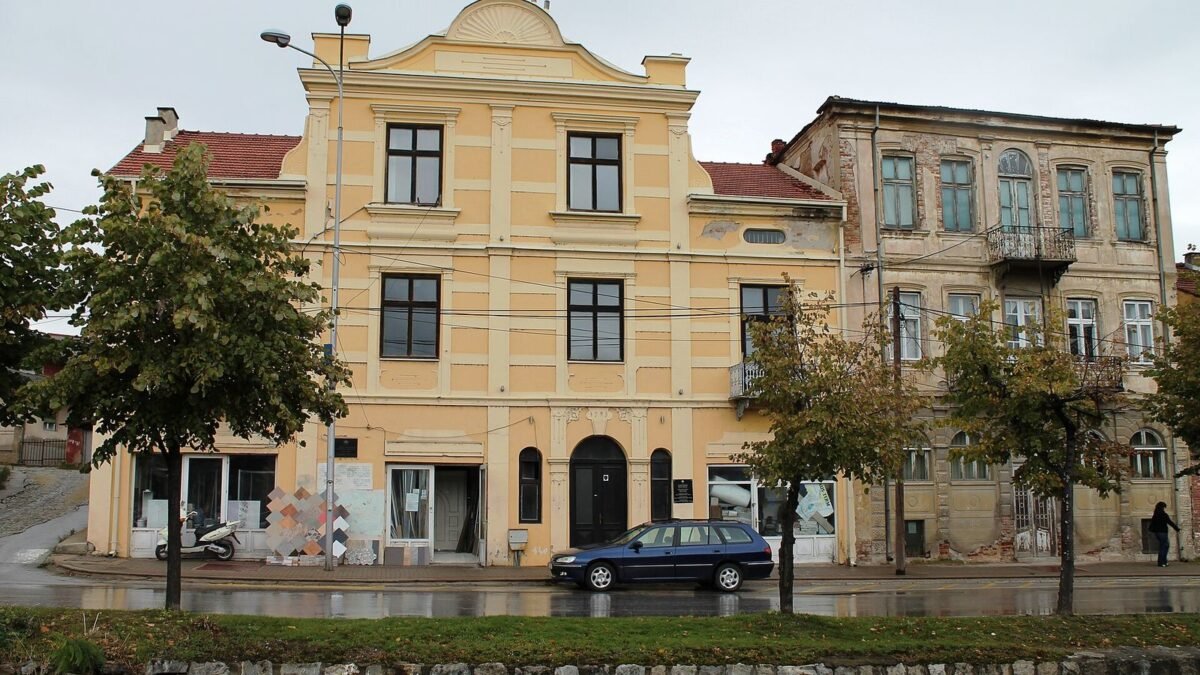
In November 1908, delegates met at the Congress of Manastir, in today’s Bitola in North Macedonia, and agreed on a single Latin-based alphabet of 36 letters. It is the alphabet still used today, with letters such as ç, ë, dh, gj, ll, nj, rr, sh, th, xh and zh representing sounds that need special symbols. Each letter corresponds closely to one sound, which makes Albanian spelling largely phonetic.
Gheg and Tosk
Albanian has two main dialect groups, divided roughly by the Shkumbin river in central Albania. Gheg is spoken in the north, in Kosovo, North Macedonia and Montenegro; Tosk in the south. They differ in pronunciation, vocabulary and some grammar. Tosk speakers say “Shqipëri”, while some Gheg speakers would say “Shqypni”. Arbëresh communities in southern Italy, descended from refugees of the 15th century, and Arvanites in Greece speak old varieties of Albanian too.
The standard language
The modern standard language, codified largely on a Tosk basis at the Congress of Orthography in Tirana in 1972, is used in schools, media and administration in Albania and Kosovo. Some writers and linguists, especially from Gheg-speaking areas, have argued for giving Gheg a greater role. The debate reflects the richness of a language spoken by millions across several countries and an extensive diaspora.
For a language with few close relatives, Albanian has proven remarkably resilient, surviving empires, partitions and migrations while keeping its distinct voice.


