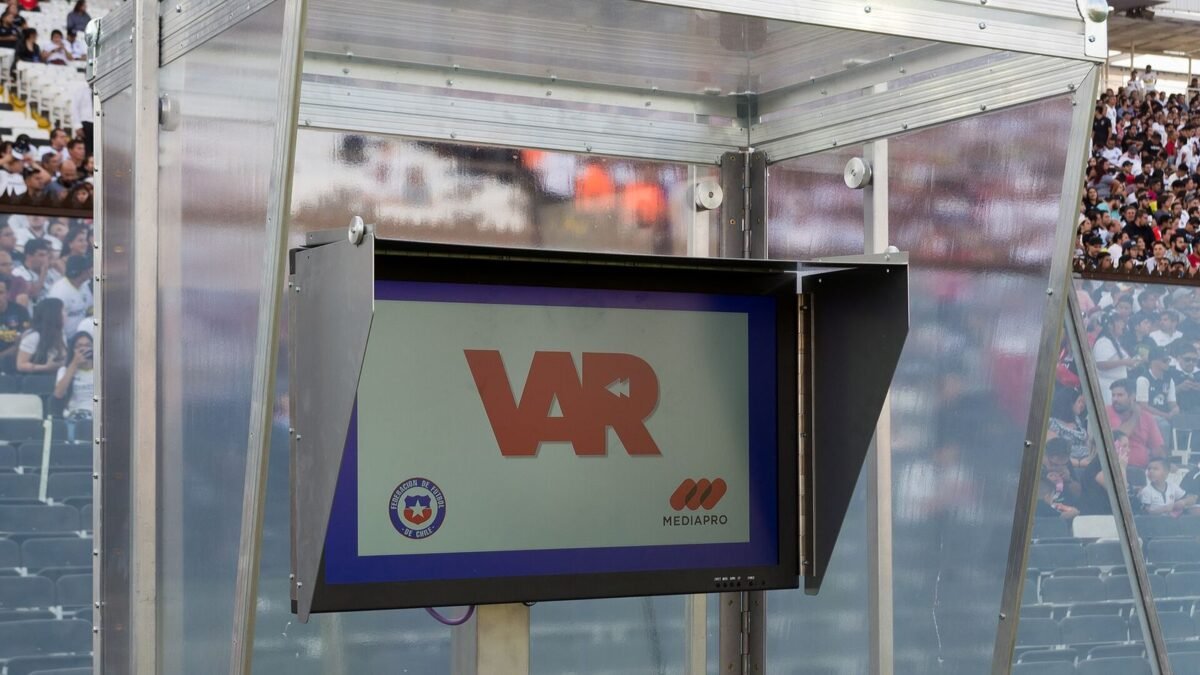
Since its introduction at the top level, the video assistant referee has become one of football’s most discussed innovations. It was first used at a World Cup in Russia in 2018 and is now standard in major leagues and competitions. Its purpose is narrow, but the arguments around it are broad.
What VAR can review
Under the protocol set by the International Football Association Board, which writes the laws of the game, VAR may only intervene in four types of match-changing situations: goals and offences leading up to them, penalty decisions, direct red cards, and cases of mistaken identity when the wrong player is cautioned or sent off.
A team of video officials watches the match from a central room with access to multiple camera angles. They check every such incident silently. If they believe the on-field referee made a “clear and obvious error” or missed a serious incident, they advise the referee.
Reviews and the screen
For factual decisions, such as whether a player was offside or whether a foul was inside or outside the penalty area, the referee can accept the VAR’s information directly. For subjective decisions, like whether a challenge was reckless, the referee usually goes to the pitchside monitor for an on-field review and makes the final decision. The referee, not the VAR, always has the last word.
Why disputes continue
The phrase “clear and obvious” is open to interpretation, and different leagues apply it differently. Offside decisions measured to centimetres frustrate fans when a toe or shoulder decides a goal. Long checks interrupt celebrations and the flow of the game. Handball rules, revised several times, remain a source of confusion.
Some competitions have tried to improve transparency. Semi-automated offside technology, which tracks players’ limbs with cameras, was used at the 2022 World Cup to speed up decisions. Several competitions now let referees announce the outcome of reviews to the stadium.
Has it helped?
Studies by leagues and governing bodies report that VAR has corrected a large number of wrong decisions and increased the accuracy of key calls. Yet the perception of fairness matters as much as accuracy. For many supporters, the debate is less about whether VAR works than about how much of football’s spontaneity they are willing to trade for it.


