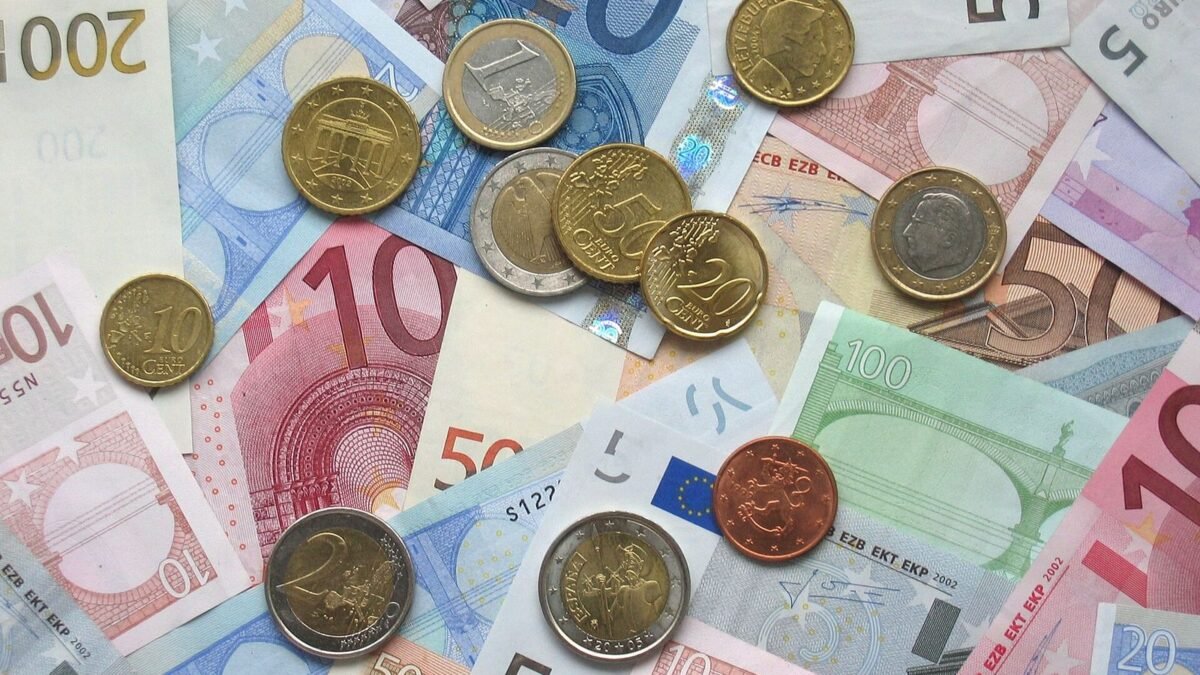
When the European Central Bank raises or lowers interest rates in Frankfurt, the decision is designed for the twenty-one countries of the euro area. But it is also felt in Pristina and Podgorica. Kosovo and Montenegro use the euro as their only official currency even though they are not members of the European Union, let alone of the monetary union. Economists call this unilateral euroisation, and it is one of the most unusual monetary arrangements in Europe.
How it happened
Both economies emerged from the turbulence of the 1990s with little trust in local money. Montenegro adopted the German mark in 1999, partly to shield itself from the Yugoslav dinar and the policies of Belgrade. In Kosovo, the United Nations administration made the mark legal tender the same year. When the mark was replaced by euro notes and coins in 2002, both simply followed. No treaty was signed and no permission was formally granted; the euro was adopted because people already trusted it and used it.
In February 2024, the Central Bank of Kosovo went a step further by requiring that cash transactions be carried out in euros, ending the use of the Serbian dinar for such payments in Serb-majority areas. The decision was controversial for political reasons, but it underlined how central the euro has become to Kosovo’s monetary system.
The benefits: stability and credibility
The advantages are real. There is no exchange-rate risk when trading with the euro area, which is the main market for both economies and the source of most tourism and diaspora income. Inflation expectations are anchored by a currency managed by one of the world’s most credible central banks. Households do not fear an overnight devaluation that wipes out their savings, a memory that still shapes behaviour across the region.
For foreign investors, the absence of currency risk lowers one important barrier. For governments, it removes the temptation to finance deficits by printing money.
The costs: a policy made for someone else
The price of that stability is the loss of independent monetary policy. When the ECB tightened policy sharply in 2022 and 2023 to fight inflation in the euro area, borrowing costs rose in Kosovo and Montenegro too, regardless of local conditions. If their economies slow while the euro area is booming, they cannot cut rates or let their currency weaken to support exporters.
Adjustment therefore has to come from elsewhere: from fiscal policy, from wages and prices, or from productivity. That is a harder and slower path, and it places a heavy burden on governments to keep public finances sound.
There is also the question of seigniorage, the income a central bank earns from issuing currency. Euro-area members share that income. Countries that adopt the euro unilaterally have to buy the euros they use, effectively transferring that benefit to the euro area.
No lender of last resort
The most important risk concerns banks. In a normal currency system, a central bank can create money to lend to solvent banks facing a sudden run. The Central Bank of Kosovo and the Central Bank of Montenegro cannot print euros. Their ability to support the banking system is limited to the reserves they hold and to any arrangements they can make in advance.
In practice, much of the banking sector in both countries consists of subsidiaries of larger European groups, which can provide support from their parent banks. Deposit insurance schemes and conservative liquidity rules provide further protection. Still, the absence of a lender of last resort means supervisors must be stricter than in a country with its own currency.
What Brussels and Frankfurt think
The EU has made clear since 2000 that unilateral euroisation is not a shortcut into the euro area. A country that joins the EU is expected to go through the normal process, including meeting the convergence criteria on inflation, public finances and interest rates. How the EU would handle a future member that already uses the euro, as would be the case with Montenegro, has not been formally settled, and it is likely to be part of the accession negotiations themselves.
The bottom line
For two small, open economies with a history of monetary instability, the euro has delivered what citizens wanted most: a currency they trust. The trade-off is that the most important economic lever, the interest rate, is set by an institution that does not include them. That makes sound budgets, strong bank supervision and steady productivity gains not just good policy but the only tools they have.
This article is for general information and is not financial advice.