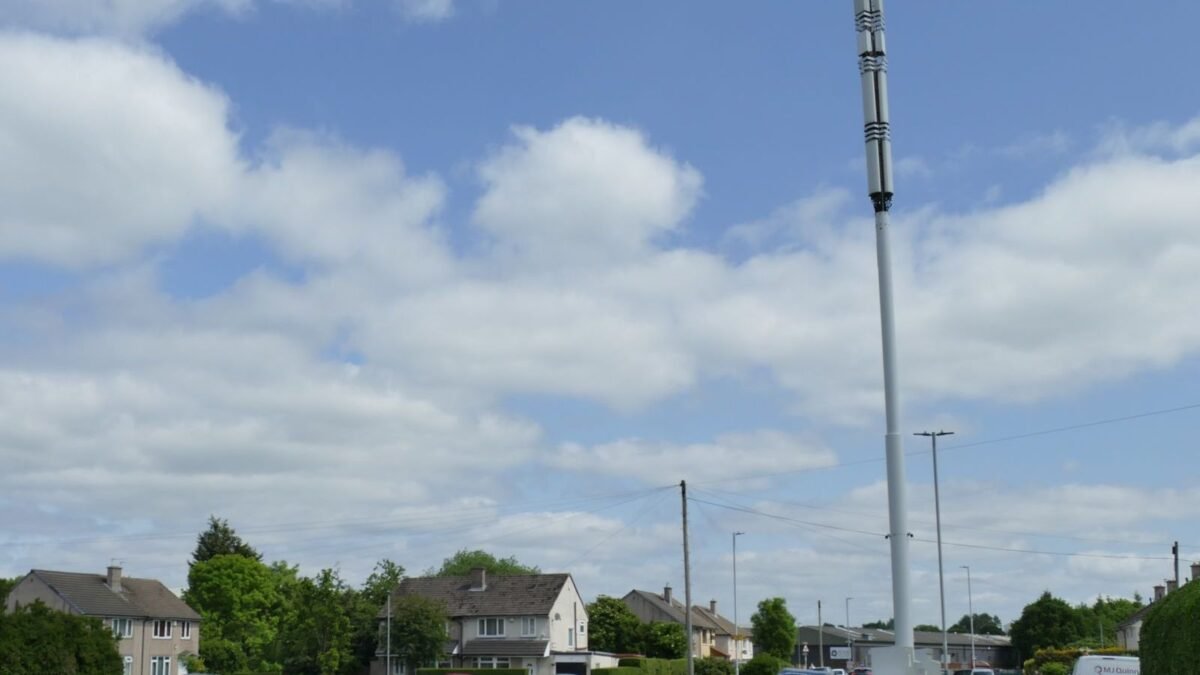
Operators in the Western Balkans have been launching 5G services in recent years, usually starting in capital cities. Advertising focuses on speed. Engineers, however, point out that 5G was designed for more than faster videos on a phone.
Three goals
The international standards behind 5G aim at three broad uses. The first is enhanced mobile broadband: higher speeds and more capacity in crowded places like stadiums and city centres. The second is ultra-reliable low-latency communication, meaning very short delays, which matters for industrial machines, remote control systems and some medical applications. The third is massive machine-type communication, connecting large numbers of sensors, meters and devices.
Frequencies matter
5G uses several frequency bands. Low bands travel far and penetrate buildings well but offer modest speeds. Mid bands, such as the widely used 3.5 GHz range in Europe, balance coverage and capacity. High bands, called millimetre wave, offer very high speeds over short distances and are blocked easily by walls and even rain. Most European deployments so far rely on low and mid bands, which is why real-world speeds are good but rarely match the most dramatic advertising claims.
Standalone versus non-standalone
Many early 5G networks are “non-standalone”: the radio part is 5G, but the core network behind it is still 4G. This delivers better speeds but not all of 5G’s features. Standalone networks with a 5G core are needed for the lowest latency and for advanced functions such as network slicing, where operators reserve dedicated virtual networks for specific uses like emergency services.
Health concerns
Claims linking 5G to health problems, including during the pandemic, spread widely online. Health authorities such as the World Health Organization and international radiation protection bodies have found no established evidence that mobile network signals within safety limits harm health. Exposure limits apply to 5G as they did to earlier generations.
What it means locally
For most users in the region, 5G will at first mean faster mobile internet in cities. Its bigger potential lies in industry, logistics, energy grids and public services. That depends on investment, spectrum auctions and demand from businesses, not only on the technology itself.